


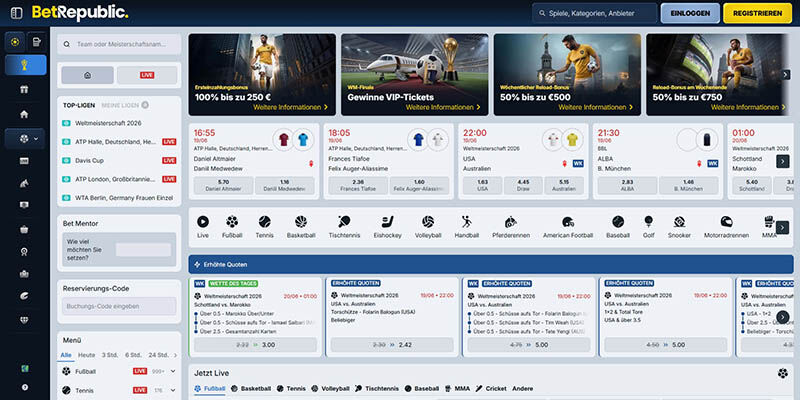
The growth of digital platforms has made it possible for internet users around the world to access entertainment, financial services, and interactive websites within seconds. This technological shift has also brought greater attention to online betting sites in Saudi Arabia, particularly among people searching for information about sports wagering, digital gambling platforms, and the rules governing online activity.
However, digital accessibility should not be confused with legal permission. Saudi Arabia has a regulatory environment in which gambling is prohibited, and the country’s legal framework is strongly influenced by Islamic principles. The Basic Law of Governance states that the Kingdom applies Sharia and identifies the Quran and Sunnah as fundamental sources of governance.
For that reason, understanding the difference between what can technically be found online and what is legally permitted is essential.
The Digital Presence of Betting Platforms
The internet has removed many of the traditional geographical barriers associated with online services. A website hosted outside Saudi Arabia may be visible to users in different countries, while advertisements, social-media discussions, and search results can make international betting platforms easier to discover.
This does not mean that such platforms are locally licensed or authorized. In Saudi Arabia, there is no domestic licensing framework that permits commercial sports betting or online casino gambling. Current regulatory research continues to describe gambling as prohibited rather than as a regulated entertainment sector.
Consequently, users searching for online betting sites in Saudi Arabia should distinguish between online visibility, offshore availability, and domestic legality.
Understanding Saudi Arabia’s Regulatory Boundaries
Saudi Arabia’s approach to gambling differs from jurisdictions where betting is permitted under licenses and monitored by dedicated gambling regulators. The country’s legal and cultural framework does not provide a comparable domestic market for licensed sportsbooks or online casinos.
The Basic Law establishes the importance of Islamic principles within the country’s legal structure. Gambling, commonly associated with maysir under Islamic jurisprudence, is therefore treated very differently from ordinary digital entertainment.
This distinction is important because a foreign website may describe itself as licensed in another jurisdiction, but an overseas license does not automatically provide authorization to operate within Saudi Arabia.
Why Digital Access Does Not Equal Legal Access
One of the most common misunderstandings surrounding online betting is the assumption that anything accessible through a browser must be legal for the person accessing it.
That assumption is incorrect.
Websites can operate from foreign jurisdictions and remain technically discoverable even when their activities are not authorized in a particular country. Saudi Arabia also maintains mechanisms for restricting access to online material that conflicts with applicable legal, religious, or public-order requirements. Article 6 of the Anti-Cyber Crime framework addresses the publication and promotion of gambling-related material, while internet filtering mechanisms can be used to restrict access to prohibited content.
Therefore, users should never treat search-engine visibility or website availability as evidence of regulatory approval.
The Role of Payment Regulations
Financial transactions add another important layer to the issue. Saudi Arabia maintains a regulated payments ecosystem overseen by the Saudi Central Bank, commonly known as SAMA. Its payment regulations establish requirements for entities providing relevant payment services within the Kingdom.
SAMA also updated its oversight framework for payment systems and their operators in 2026, reinforcing its supervisory role over the country’s payments sector.
For someone researching online betting sites in Saudi Arabia, this means payment availability should not be interpreted as proof that a betting transaction is legally authorized. A payment method may exist for many legitimate purposes without providing approval for gambling-related transactions.
Offshore Platforms and the Regulatory Question
Much of the online betting material encountered by Saudi internet users originates from operators based outside the Kingdom. These businesses may hold licenses in other countries and advertise various forms of sports betting or casino entertainment.
However, an offshore license primarily relates to the jurisdiction that issued it. It does not transform a prohibited activity into a domestically licensed activity in Saudi Arabia.
This creates an important regulatory boundary: the location of a website’s servers or licensing authority does not necessarily determine whether Saudi residents are legally permitted to use the service.
Advertising and Promotion Matter Too
The regulatory discussion extends beyond simply placing a wager. Online advertising, promotional content, affiliate marketing, and other forms of digital promotion can also raise legal concerns.
Saudi Arabia’s cybercrime framework includes restrictions concerning the publication and promotion of gambling-related material.
As a result, websites and marketers discussing online betting sites in Saudi Arabia should avoid presenting offshore gambling services as if they were officially licensed Saudi businesses.
Sports Interest Does Not Automatically Mean Sports Betting
Saudi Arabia has a large and growing interest in sports, including football and international sporting events. The popularity of sports naturally creates an audience interested in statistics, predictions, match analysis, and competitions.
Nevertheless, sports fandom and sports wagering are separate activities.
A person can follow football, analyze team performance, discuss match probabilities, or participate in non-wagering fantasy and entertainment activities without necessarily engaging in gambling. The critical distinction is whether money or something of value is being risked on an uncertain outcome.
The Importance of Responsible Digital Research
People researching online betting sites in Saudi Arabia should approach online information carefully. Search results can contain promotional claims that emphasize bonuses, large selections of markets, fast withdrawals, or international licenses while giving little attention to local legal restrictions.
A more responsible approach is to ask several basic questions:
- Is the activity permitted under Saudi law?
- Does the operator have authorization to serve users in the relevant jurisdiction?
- Where is the company actually licensed?
- Are claims about regulation independently verifiable?
- What happens to personal and financial information submitted to the platform?
- Are promotional claims clearly explained rather than exaggerated?
These questions can help users distinguish factual regulatory information from marketing language.
Online Safety and Scam Awareness
The legal issue is only one part of the risk associated with unfamiliar betting platforms. Fraud, misleading bonuses, identity theft, fake customer-support channels, and withdrawal disputes can also affect users interacting with unverified websites.
A website may look professionally designed while providing limited information about its ownership or regulatory status. Users should therefore be cautious about submitting identification documents, bank details, card information, or other sensitive data to unknown operators.
Claims such as “guaranteed winnings” or “risk-free profits” should also be treated with skepticism. Legitimate financial or entertainment services cannot guarantee that a user will consistently make money from uncertain outcomes.
Regulatory Boundaries Are More Important Than Website Features
Betting platforms often compete by highlighting mobile applications, live markets, promotional offers, payment options, and large numbers of sporting events. These features may influence how a platform appears from a consumer perspective.
But in Saudi Arabia, the first question is not whether a website has attractive technology. It is whether the underlying activity is legally permitted.
This is why researching online betting sites in Saudi Arabia requires a regulatory-first approach. Features and convenience become secondary when the underlying activity falls outside the country’s permitted legal framework.
A Changing Digital Environment Does Not Mean Gambling Has Been Legalized
Saudi Arabia’s digital economy continues to develop rapidly, with significant investment in technology, digital services, entertainment, and sports. These developments can sometimes create speculation that gambling regulations might change alongside broader economic modernization.
However, digital modernization should not automatically be interpreted as legalization of gambling.
As of 2026, available regulatory information continues to characterize gambling as prohibited in Saudi Arabia, with no domestic gambling licensing regime comparable to regulated betting markets elsewhere.
Any future change would need to come through an appropriate legal and regulatory development rather than simply through the appearance of new websites.
What Internet Users Should Understand
The central lesson is straightforward: digital access and legal authorization are two different concepts.
An international betting platform may be visible online, but that does not mean it is licensed in Saudi Arabia. Similarly, an overseas gambling license does not automatically override Saudi regulations. Payment availability, mobile compatibility, advertising, and search-engine visibility should not be mistaken for domestic regulatory approval.
For anyone researching online betting sites in Saudi Arabia, understanding these boundaries is more valuable than simply comparing websites or promotional offers.
Conclusion
The online betting discussion in Saudi Arabia exists at the intersection of rapidly developing digital technology and a regulatory framework that prohibits gambling. International websites may create the impression that betting is widely available, but their online presence does not establish legal authorization within the Kingdom.
The safest way to understand the subject is therefore to separate digital access, offshore operation, payment infrastructure, advertising, and domestic legality. Saudi Arabia’s Basic Law and cybercrime framework provide important context for understanding why gambling occupies a restricted position within the country’s digital environment.
Ultimately, anyone researching online betting sites in Saudi Arabia should prioritize accurate legal information, recognize the difference between foreign licensing and Saudi authorization, and remain cautious about financial and personal-data risks associated with unregulated online platforms.
