


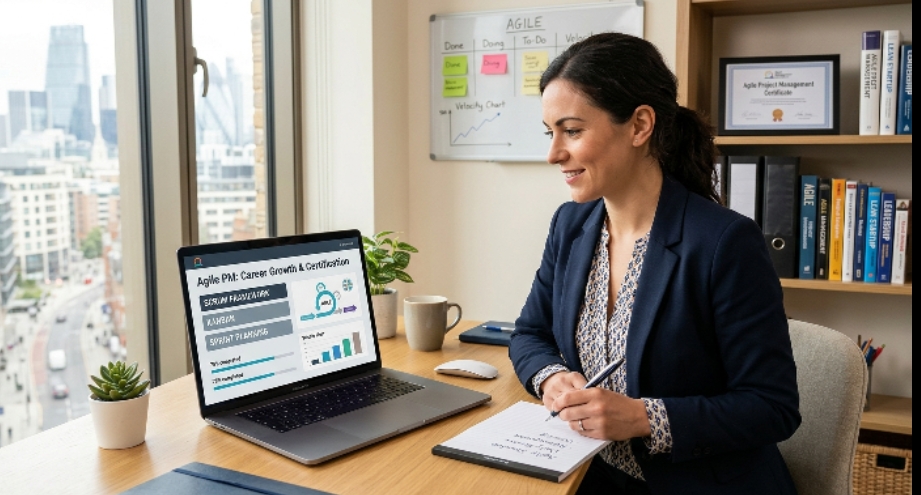
Modern workplaces need professionals who can manage changing priorities, collaborate with different teams, and deliver valuable results. Agile project management has become an important approach for organisations working in fast-moving environments. An Agile Project Management e-learning Course can help professionals build these skills without interrupting their existing work commitments. Through flexible online learning, learners can understand Agile principles, improve project delivery techniques, and develop stronger professional capabilities. Whether you are starting your project management career or aiming for a senior role, Agile learning can provide practical knowledge to support long-term career development.
How Can an Agile Project Management e-learning Course Build In-Demand Skills?
Agile projects can change as customer needs, market conditions, and business priorities evolve. An Agile Project Management e-learning Course helps learners understand how to plan projects while remaining flexible when circumstances change. Instead of depending entirely on fixed plans, professionals learn to prioritise work, review progress, and adjust activities when necessary. These skills can make project managers more confident when dealing with uncertainty while still maintaining clear objectives, deadlines, responsibilities, and business outcomes throughout the project lifecycle.
Improve Team Collaboration
Successful Agile delivery depends heavily on communication and teamwork. Agile encourages professionals to work closely with stakeholders, development teams, customers, and business representatives throughout the project. Online learning can introduce practical approaches for improving collaboration and creating shared understanding between different roles. These communication skills are valuable across industries because projects rarely depend on one individual. Professionals who can encourage productive discussions, clarify expectations, and resolve misunderstandings can contribute more effectively to successful project delivery.
Strengthen Problem-Solving Abilities
Project managers regularly face unexpected problems, changing requirements, resource limitations, and competing priorities. Agile encourages teams to identify challenges early and respond rather than allowing issues to grow. An AgilePM e-learning Course can help professionals develop structured problem-solving and decision-making skills. Learners can understand how prioritisation, regular reviews, feedback, and continuous improvement support better project decisions. These capabilities are useful beyond Agile environments because employers value professionals who can remain calm, evaluate situations, and find practical solutions.
Understand Modern Agile Practices
Agile covers a range of approaches, including Scrum, Kanban, Lean, and hybrid ways of working. Understanding these approaches helps professionals recognise that different projects may require different delivery methods. AgilePM provides a project-focused framework that combines Agile flexibility with governance and structure. Current AgilePM v3 guidance also incorporates Scrum practices and places stronger emphasis on value-driven delivery and project leadership. Learning these concepts can help professionals choose suitable practices rather than applying one method to every project situation.
How Can Agile Project Management Training Improve Your Career Opportunities?
Agile knowledge can support professionals pursuing roles such as Project Manager, Agile Project Manager, Project Coordinator, Business Analyst, PMO professional, or team leader. An AgilePM e-learning Course can provide structured knowledge that helps learners understand project roles, responsibilities, planning, delivery, and stakeholder engagement. For professionals already working in project environments, this knowledge can strengthen existing experience. For career changers, it can provide a useful foundation for entering project management and demonstrating a genuine interest in modern delivery practices.
Strengthen Your CV
A relevant Agile qualification can make your professional profile more attractive by demonstrating structured knowledge and a commitment to professional development. However, training should complement practical experience rather than replace it. When updating your CV, explain how Agile knowledge has helped you improve planning, collaboration, prioritisation, or delivery. This gives employers evidence of practical value rather than simply listing a qualification. Combining Agile training with measurable workplace achievements can create a stronger profile for project management and leadership opportunities.
Support Career Transitions
Professionals from technical, administrative, business, or operational backgrounds may already possess transferable skills that can support a move into project management. Agile training can help connect those existing capabilities with recognised project management principles. For example, business analysts can strengthen their understanding of project delivery, while team leaders can develop more structured approaches to planning and stakeholder management. This combination can make career transitions easier because professionals can demonstrate both previous experience and newly developed Agile project management knowledge.
Increase Your Value at Work
Career growth does not always require changing employers. Employees who can manage changing priorities, improve collaboration, and support effective project delivery can become valuable members of their organisations. Agile skills can help professionals contribute to transformation programmes, product development, technology projects, and continuous improvement initiatives. By applying Agile principles to real workplace challenges, employees can demonstrate initiative and practical value. Over time, this can support greater responsibilities, stronger professional visibility, and opportunities to move towards more senior project management positions.
How Can an Agile Project Management e-learning Course Strengthen Your Professional Profile?
Employers increasingly value professionals who keep their knowledge current. Project management practices continue to evolve as organisations adopt new technologies, delivery models, and business strategies. An Agile Project Management e-learning Course provides a flexible way to continue learning alongside existing professional responsibilities. Online study can allow learners to develop their knowledge without completely stepping away from work. Adding relevant training to your professional profile can demonstrate initiative, adaptability, and a commitment to improving your project management capabilities.
Learn Current AgilePM v3 Practices
Professionals choosing AgilePM training should check whether their programme reflects the current AgilePM v3 framework. The updated approach places greater emphasis on value, project leadership, Scrum integration, and delivery across multiple teams. This makes current training particularly relevant for professionals working in modern project environments. Understanding the latest framework can help learners avoid relying on outdated practices. It also gives professionals a stronger foundation for discussing Agile delivery methods and applying appropriate techniques when managing changing project requirements.
Apply Knowledge to Real Projects
Training becomes more valuable when learners can connect concepts with real workplace situations. Instead of simply memorising Agile terminology, professionals should consider how the principles apply to their own projects. They can practise prioritising requirements, managing stakeholder expectations, reviewing progress, and responding to changing circumstances. Real-world application helps turn theoretical knowledge into practical capability. It also gives professionals stronger examples to discuss during interviews, performance reviews, and promotion conversations, making their training more meaningful and career-focused.
Build Leadership Capabilities
Agile project management is not limited to managing tasks and deadlines. Professionals must also communicate direction, support teams, resolve challenges, and maintain stakeholder confidence. AgilePM v3 places increased attention on project leadership, making leadership development an important part of modern Agile learning. Professionals who strengthen these abilities can become better equipped to coordinate people and manage complex situations. Over time, stronger leadership skills can help individuals progress from supporting project activities to taking greater responsibility for project outcomes.
How Can Agile Project Management e-learning Support Long-Term Career Growth?
Career development usually happens through continuous improvement rather than one qualification. AgilePM provides Foundation and Practitioner levels, allowing professionals to build knowledge progressively. Foundation-level learning can establish an understanding of AgilePM principles and practices, while Practitioner-level development focuses more strongly on applying the framework. An AgilePM e-learning Course can therefore become part of a wider professional development plan. Learners can combine training with workplace experience, additional qualifications, mentoring, and increasingly complex project responsibilities.
Become More Adaptable
Adaptability is one of the most useful skills professionals can develop in today’s changing workplace. Projects may experience shifting customer expectations, new technologies, resource constraints, or changing organisational priorities. Agile encourages professionals to respond to these changes while maintaining focus on valuable outcomes. Learning Agile project management can therefore improve more than technical project skills. It can also develop a mindset that supports flexibility, continuous feedback, and informed decision-making when projects do not progress exactly as originally planned.
Focus on Business Value
Effective project management is not simply about completing activities on time. Organisations also need projects to produce meaningful business value. AgilePM v3 places greater emphasis on value-driven delivery, encouraging professionals to consider whether project work is contributing to desired outcomes. This perspective can improve how professionals communicate with senior stakeholders because they can connect project decisions with broader organisational goals. Developing this business-focused approach can be particularly valuable for professionals who want to progress into senior project, programme, or leadership positions.
Develop a Long-Term Learning Mindset
View completing an Agile course as one stage of professional development rather than the final destination. Professionals can continue building their expertise through practical experience, advanced training, professional communities, and exposure to different types of projects. An Agile Project Management e-learning Course can provide the foundation, but applying the knowledge consistently is what creates lasting value. By remaining curious and willing to improve, professionals can build a stronger combination of technical knowledge, leadership ability, adaptability, and practical project experience.
Conclusion:
An Agile Project Management e-learning Course can support career advancement by developing practical skills in planning, collaboration, problem-solving, adaptability, and leadership. It can help professionals strengthen their CVs, prepare for new project management opportunities, and contribute more effectively within their current organisations. The latest AgilePM v3 approach also reflects modern project needs by focusing on value, leadership, Scrum integration, and flexible delivery. However, the real career benefit comes from applying the knowledge in practical situations. By combining Agile training with workplace experience and continuous learning, professionals can build a stronger profile and create opportunities for sustainable career growth.
