


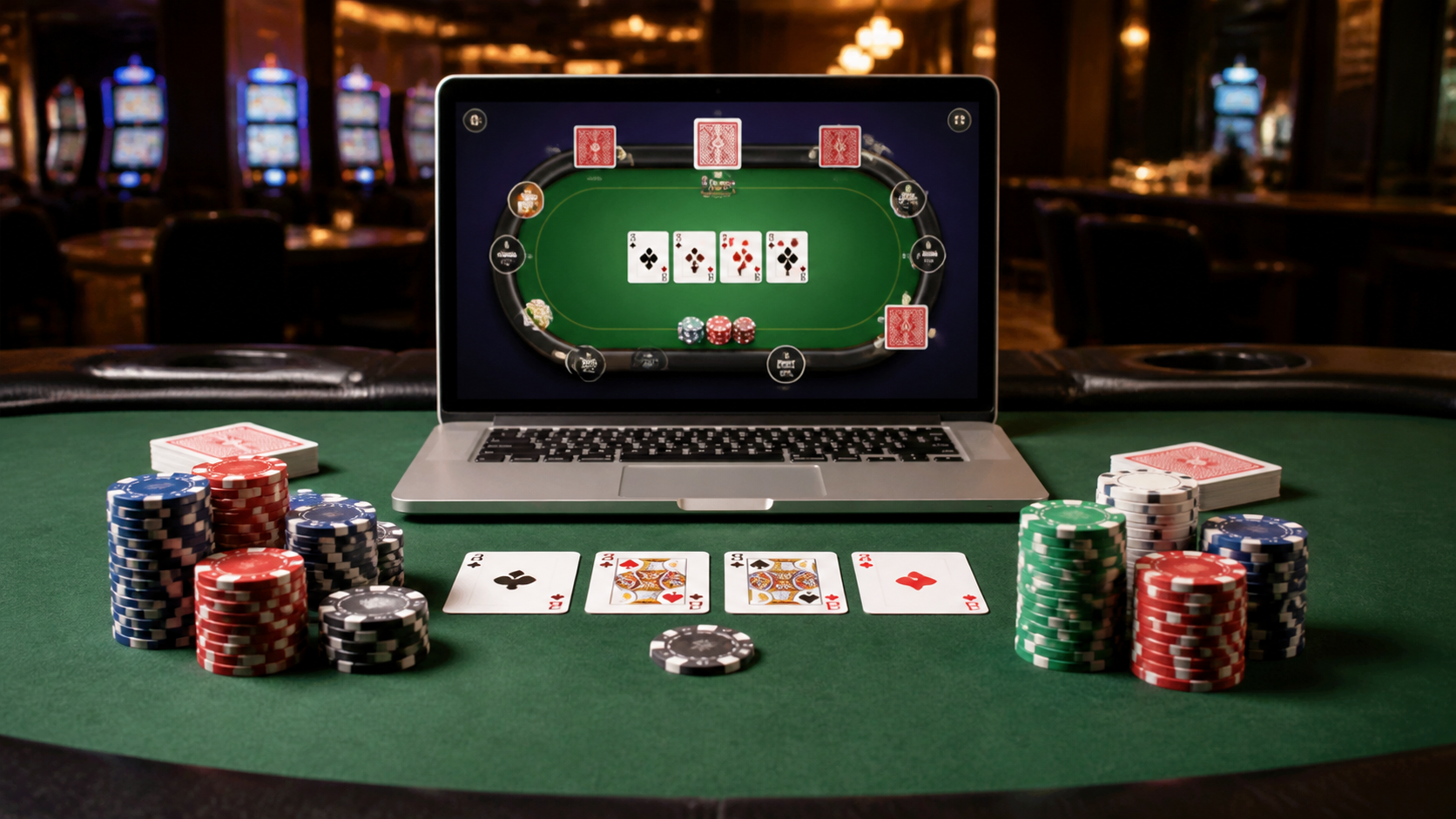
Online poker has become one of the most accessible card games for people who enjoy strategy, timing, and reading patterns rather than relying only on luck. It offers a different experience from casual home games because the pace is faster, the player pool is wider, and the decisions you make matter more over the long run. For many players, that combination is what makes the format so appealing.
At the same time, online poker can feel overwhelming at first. Tables move quickly, unfamiliar terms appear everywhere, and it is easy to confuse short-term outcomes with good decision-making. A thoughtful approach helps more than chasing big pots. The best way to begin is to understand how the game works, what to look for in a platform, and how to manage your play in a steady, realistic way.
What Makes Online Poker Different From Other Card Games
Online poker is not just a digital version of a familiar table game. The setting changes how people play, how quickly they act, and how information is gathered during a hand. Instead of watching a physical opponent, players often rely on betting patterns, timing, and table dynamics. That shift makes observation just as important as the cards themselves.
Another major difference is volume. A player can see many more hands online than in a live setting, which means both learning and mistakes happen faster. This can be useful for practice, but it also means poor habits become visible quickly. Players who treat each hand as part of a larger pattern usually make more grounded decisions than those who focus only on a single result.
How to Choose a Reliable Poker Platform
Selecting a good platform matters because the experience affects everything from game flow to personal comfort. A clean interface, smooth navigation, and easy-to-understand table layout can make a noticeable difference, especially for new players. It is also worth looking at whether the site offers beginner-friendly tables, helpful settings, and clear account controls.
Many players also care about fairness, responsible play tools, and how straightforward the banking or account process feels. Those factors do not guarantee a better outcome, but they can reduce friction and help the game feel more manageable. If you are comparing options, it helps to think about the site as part of your overall poker routine rather than as an afterthought.
Features worth checking before you start
- Table selection that matches your experience level
- Clear game rules and easy-to-read interfaces
- Fast loading and stable performance during play
- Helpful play-history or hand-review tools
- Responsible play settings such as session limits or reminders
What to avoid when comparing options
- Confusing navigation that makes basic actions slow
- Tables that feel too advanced for a beginner
- Unclear rules or hidden conditions around game formats
- Overly crowded screens that make decision-making harder
Building Better Habits at the Table
Good poker habits are less about memorizing flashy moves and more about consistency. The most useful habit is patience: folding weak hands is often more valuable than forcing action. Another useful practice is paying attention to position, because acting later in a hand usually gives you more information and can make your choices easier.
Bankroll awareness also matters. Even when a player is enjoying the game, it helps to set a clear boundary for how much time or money will be spent. That is not about removing the fun; it is about keeping decisions calm enough that one difficult session does not define the entire experience. Players who separate entertainment from pressure tend to stay more balanced.
When you are learning, it can help to focus on a small number of ideas at once. For example, you might work on starting hand selection one week and bet sizing the next. That approach is often more useful than trying to master every aspect of the game immediately.
Reading Opponents and Recognizing Table Patterns
One of the most interesting parts of poker is that every table develops its own rhythm. Some tables are cautious, with many players waiting for strong holdings. Others are loose and aggressive, creating more action and more uncertainty. Recognizing which type of environment you are in can change the way you approach each decision.
Even without seeing a player face to face, patterns become visible. Some opponents act quickly with routine decisions and slow down only when uncertain. Others vary their betting size depending on the strength of their hand. These clues are not perfect, but they can support more informed choices when combined with the cards and the flow of the hand.
Common patterns new players often miss
- Betting consistently larger only when a player has strong hands
- Sudden changes in tempo after a board texture becomes more threatening
- Overcommitting chips in situations where patience would be safer
- Ignoring how earlier actions shape the rest of the hand
Why discipline matters more than guessing
It is tempting to treat poker as a constant puzzle where every opponent is trying to trick you. In reality, disciplined play usually matters more than dramatic guesses. A cautious but thoughtful approach often outperforms a style built on speculation alone. The goal is not to read minds; it is to make the clearest decision available with the information in front of you.
For players looking to explore เกมโป๊กเกอร์ออนไลน์ in a more structured way, the most useful mindset is to combine observation with simple rules you can follow consistently. That combination can help reduce impulsive decisions and make each session feel more intentional.
Playing Responsibly and Keeping the Experience Enjoyable
Because poker mixes skill and uncertainty, the experience can become emotionally intense if every hand feels personal. That is why responsible play is such an important part of the game. Setting a time limit, deciding on a comfortable budget, and stepping away after a frustrating stretch are practical ways to keep the game in perspective.
It also helps to define success realistically. A good session is not always the one where you leave with more chips or money. Sometimes it is the session where you made fewer rushed decisions, noticed more table patterns, or avoided chasing losses. Those quieter improvements are often what lead to better long-term habits.
If you want the game to stay enjoyable, keep your goals simple. Learn one concept at a time, choose tables that fit your comfort level, and avoid treating short-term swings as permanent signals. Poker becomes easier to appreciate when you see it as a decision-based game rather than a test of pride.
Conclusion: A Smarter Way to Approach Online Poker
Online poker rewards players who slow down, observe carefully, and make decisions with a clear purpose. The most useful improvements usually come from practical habits rather than dramatic strategies: choosing a suitable platform, staying patient, watching table patterns, and keeping your play within sensible limits. Those basics create a stronger foundation than chasing quick results.
Whether you are still learning or refining an existing style, the game is easier to enjoy when you focus on consistency and discipline. A measured approach will not remove uncertainty, but it can make each session more thoughtful, more controlled, and ultimately more rewarding as a form of skill-based entertainment.
